Crimping
On the production line, the challenge is often not the crimping itself, but everything around it. Valves must be placed on the can at the right moment and in the correct way, while the line continues running at speed. Variations in valve types or dip tubes can quickly cause disruptions, especially if operators need to intervene to correct the process.
Crimping itself is the mechanical attachment of the valve to the can, creating an airtight seal. This process requires a consistent and precise movement, ensuring that every can is processed in the same way. Small deviations can directly affect the seal and therefore the performance of the final product.
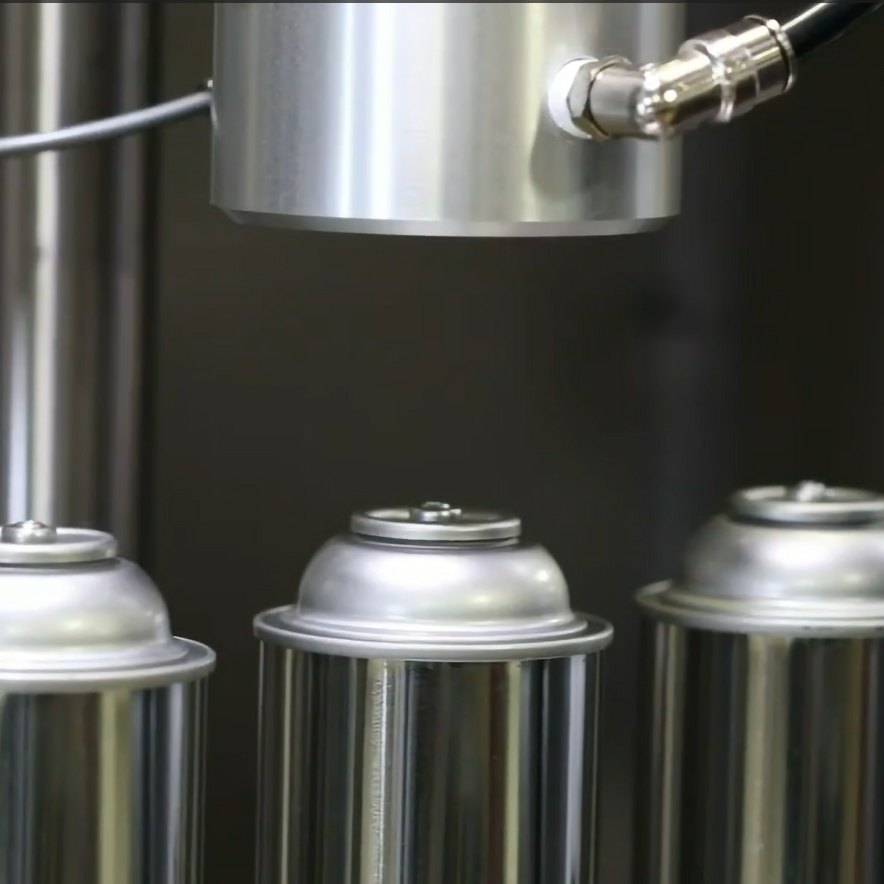
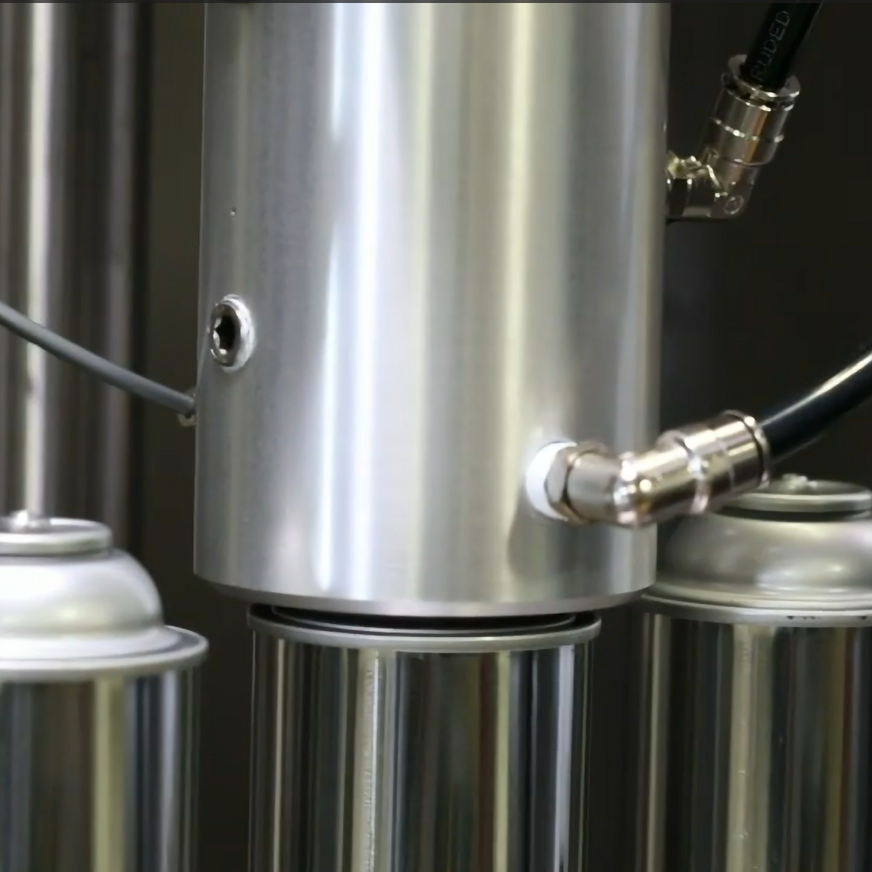
Valve Handling
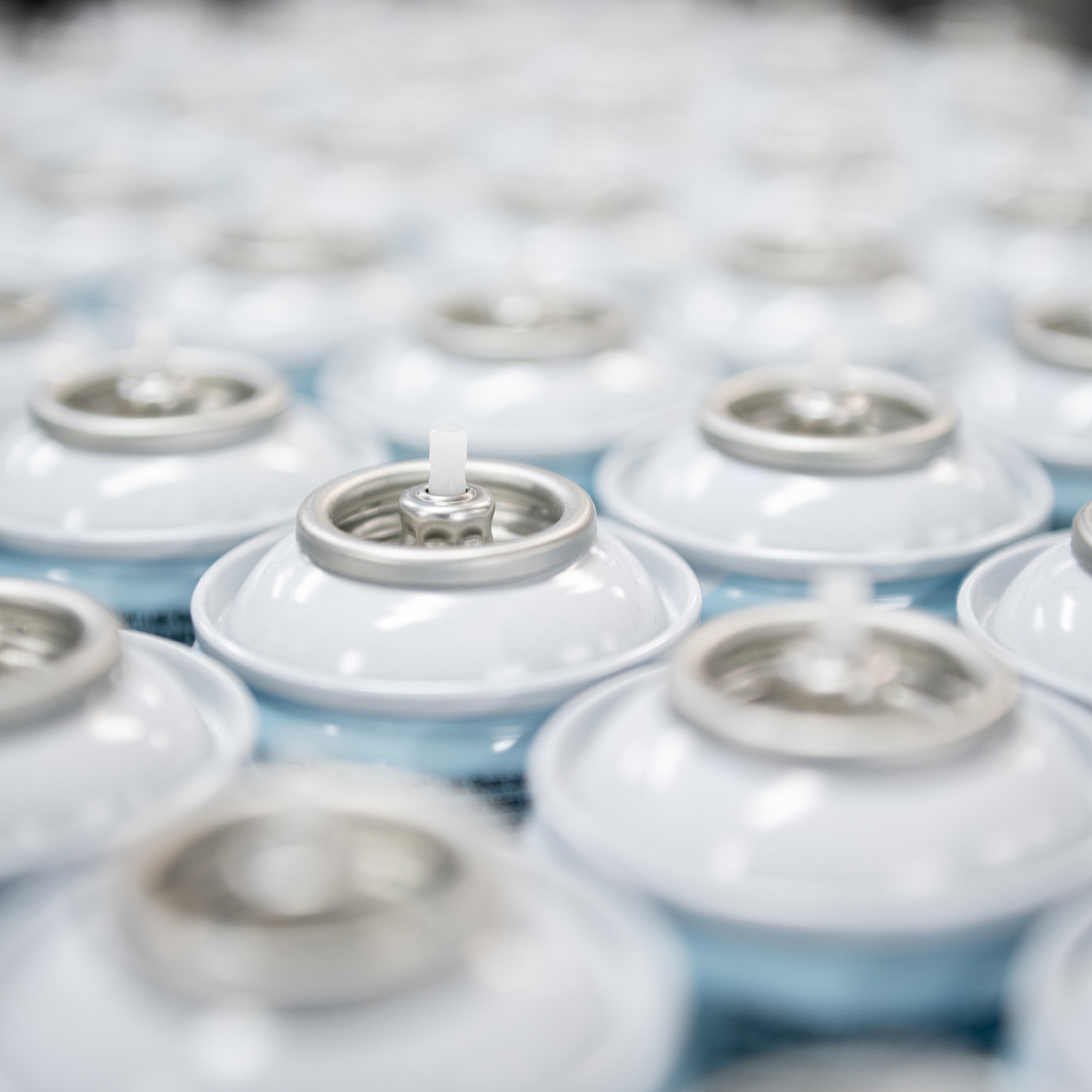
Before crimping can take place, the valve must be supplied and positioned correctly. This can be done manually at lower speeds, but in most production environments it is automated. Valves are first sorted and aligned, after which they are positioned and placed onto the can.
The method depends on the valve type. A standard valve requires a different approach than a version with a dip tube or BOV. These differences determine how the handling system is set up and how much guidance or correction is needed during production. Depending on the application, this can range from relatively simple feeding systems to more advanced setups that handle complex shapes and orientations.
Crimping in the line
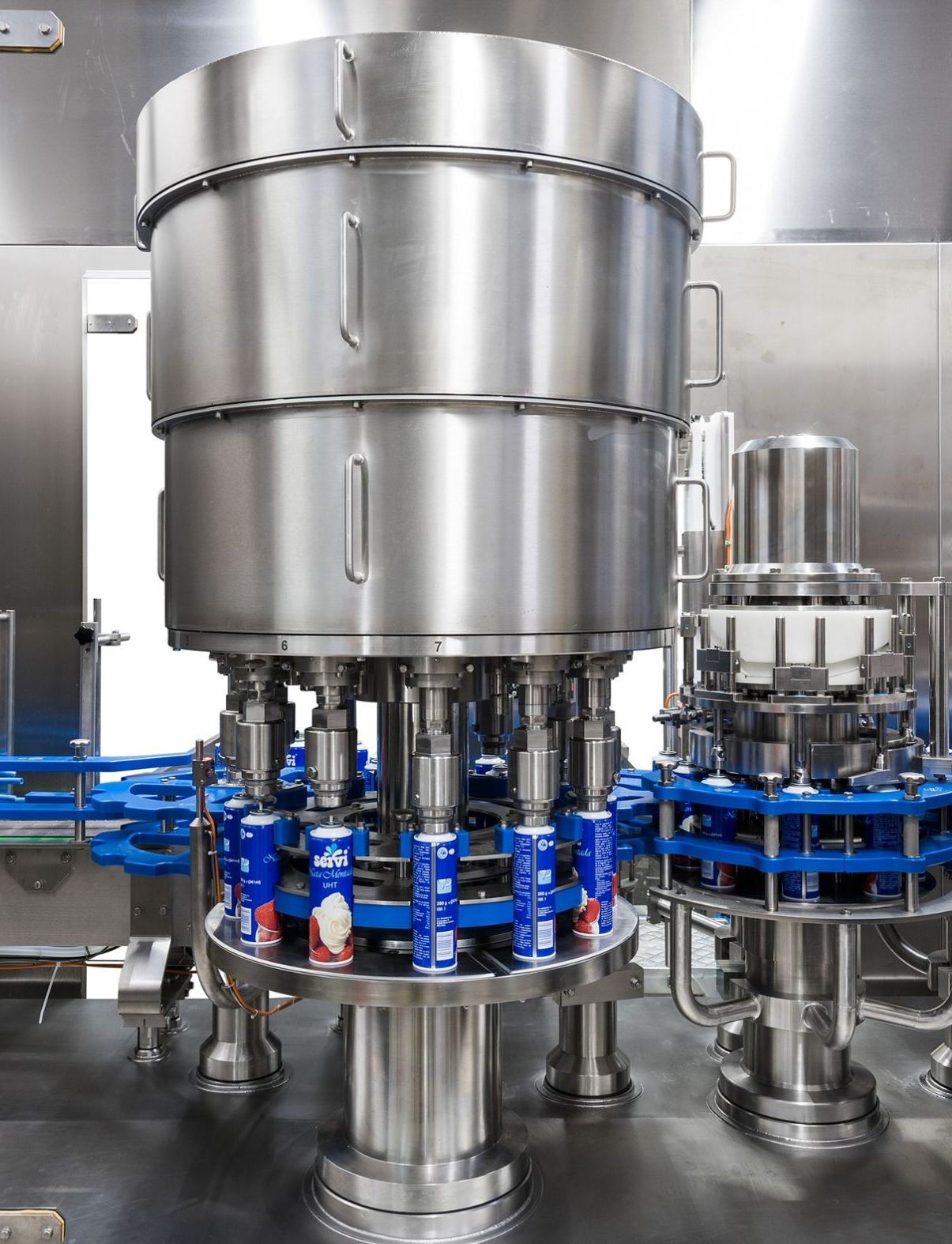
The implementation of the crimping step is usually determined in combination with the rest of the process. Crimping can be carried out as a standalone step, but is often combined with other functions such as under-the-cup gassing or vacuum crimping.
How this combination is configured depends on the application and the desired line setup. In some cases, compact integration is preferred, while in others steps are separated to maintain more control over the process. This is determined together to ensure the solution fits the application and remains stable at the required speed and level of variation.