
Capping
On the line, placing a cap or actuator may seem like a simple step, but in practice variation often occurs here. Different shapes, sizes, and orientations of caps and actuators mean placement is not always straightforward. Especially at higher speeds, this can lead to misplacements or additional manual corrections.
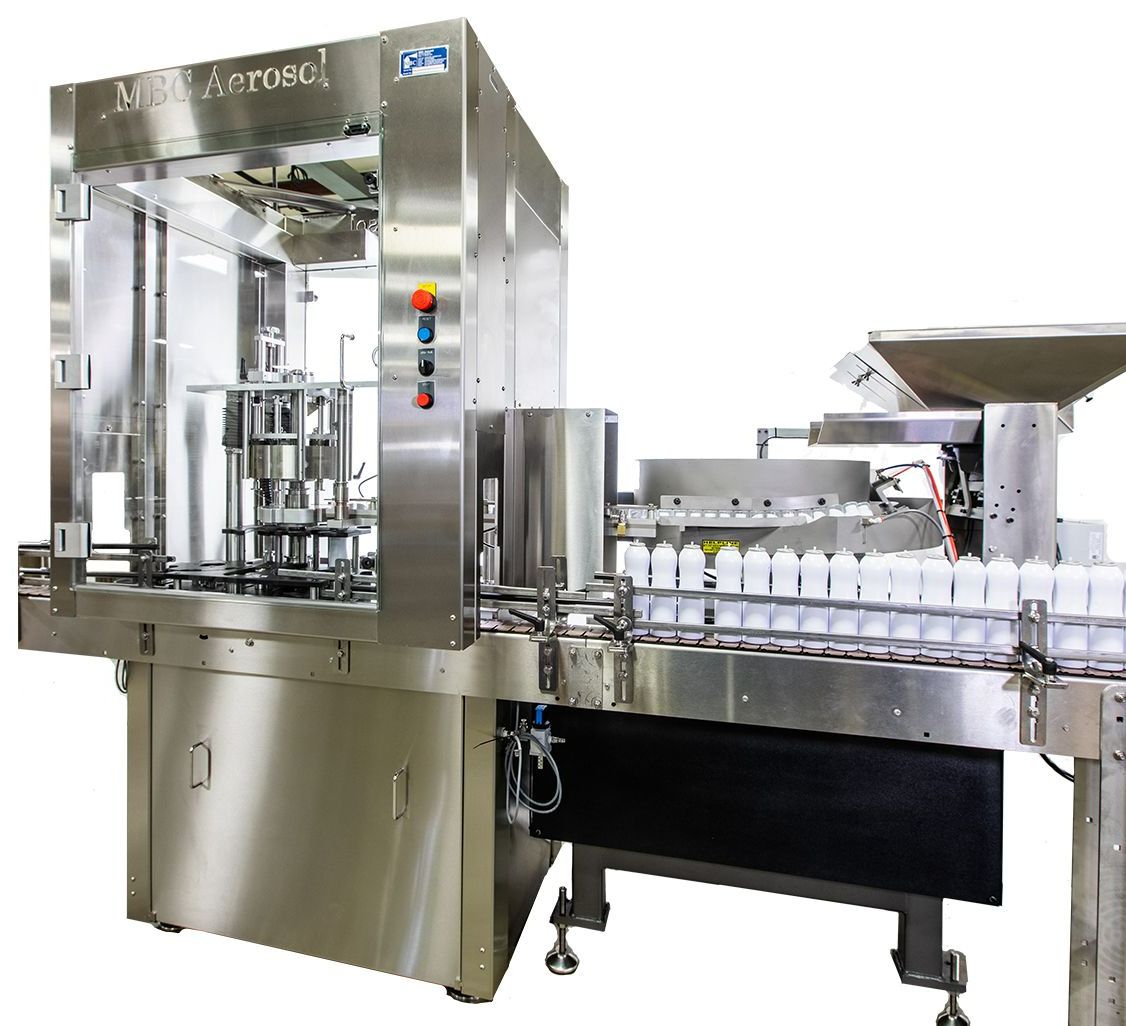
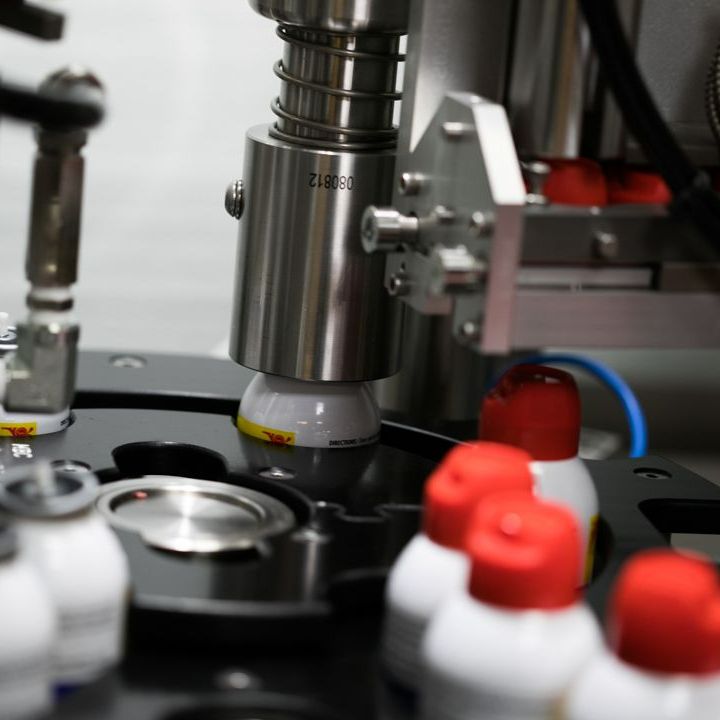
Capping is the controlled placement of an actuator and/or cap onto the aerosol can. This can be done manually at lower volumes, but as production increases, it is typically automated. Even for smaller batches, a semi-automatic solution can help make placement more consistent and reduce dependency on operators.
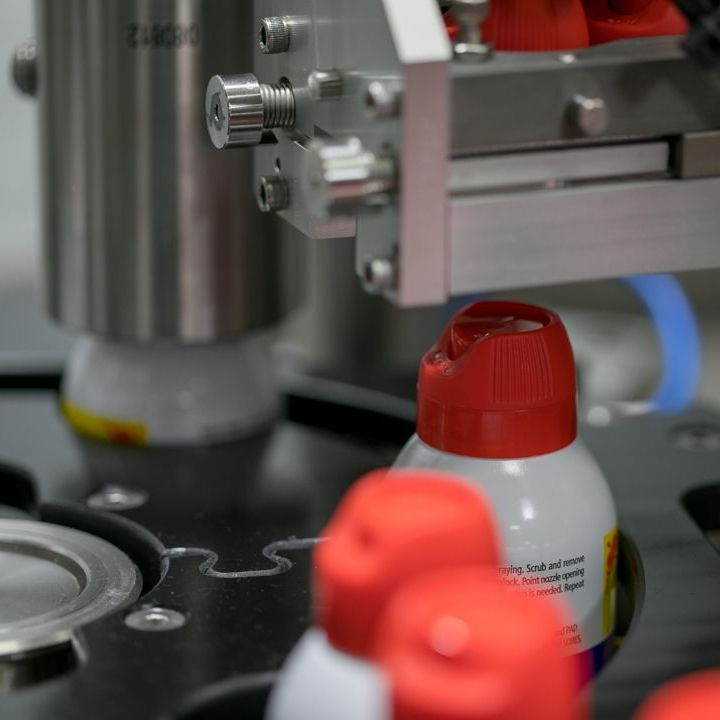
Handling and placement
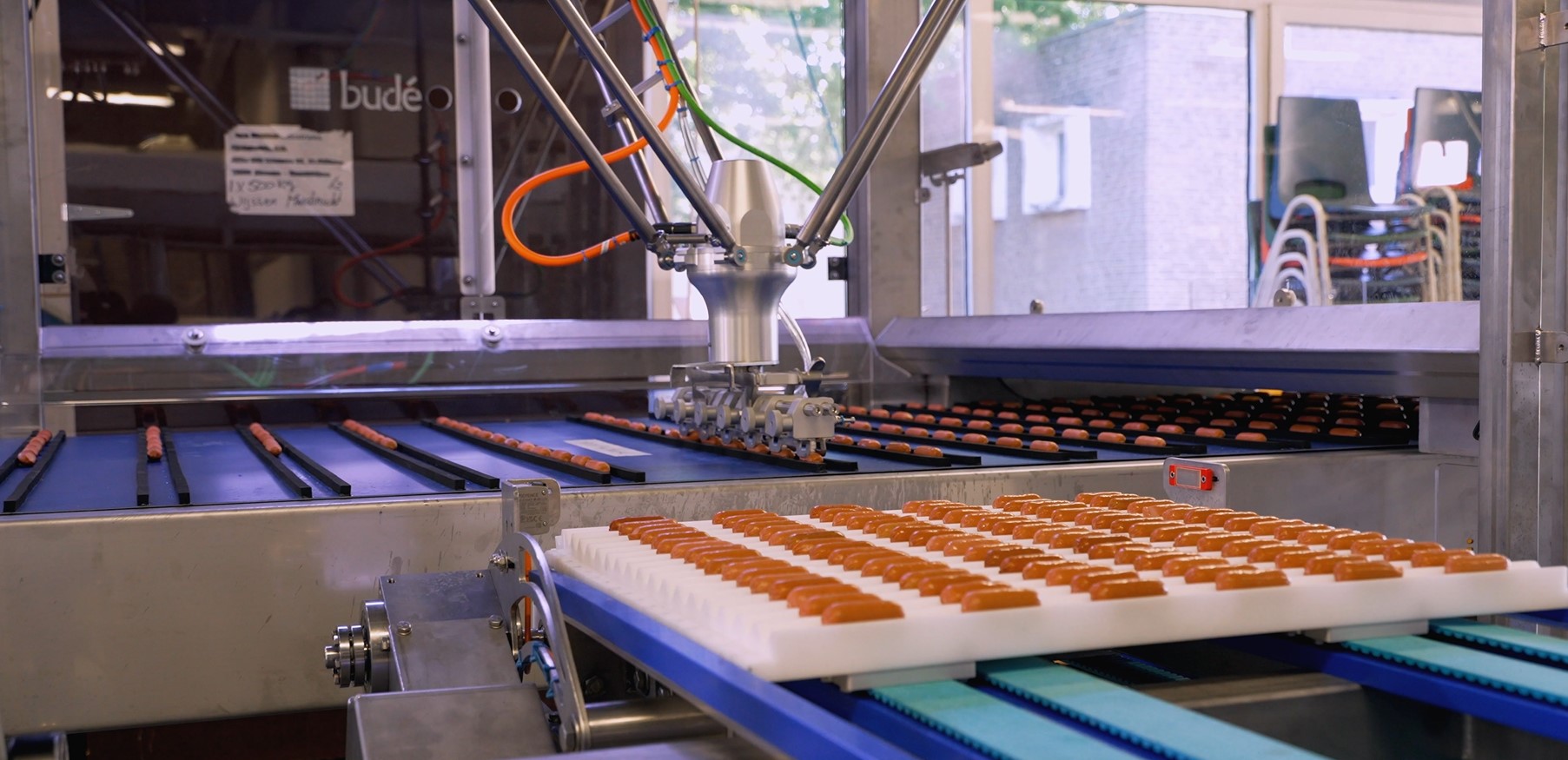
For a stable process, not only the placement itself is important, but also how the components are supplied. Caps and actuators need to be correctly sorted, oriented, and positioned before being placed onto the can.
The complexity depends on the type of component. Simple caps require a different approach than actuators with specific orientation requirements or multiple parts. Depending on the application, handling can range from basic feeding systems to more advanced solutions where orientation and positioning are fully automated.
Integration in the line
The setup of the capping step is aligned with the rest of the production line. This can be a standalone solution or an integrated part of an existing line, depending on the required capacity and configuration.
Factors such as format changes, speed, and maintenance are taken into account. How the machine is configured depends on the type of product and the variation in packaging. This is determined together, ensuring the system fits the application and continues to run without interruptions.